
Tosaf’s Investments in North America Result in 40% Increase in Production Capacity
Backed by a global presence, Tosaf provides localized additive and color solutions, and services for the plastic industry in North America.


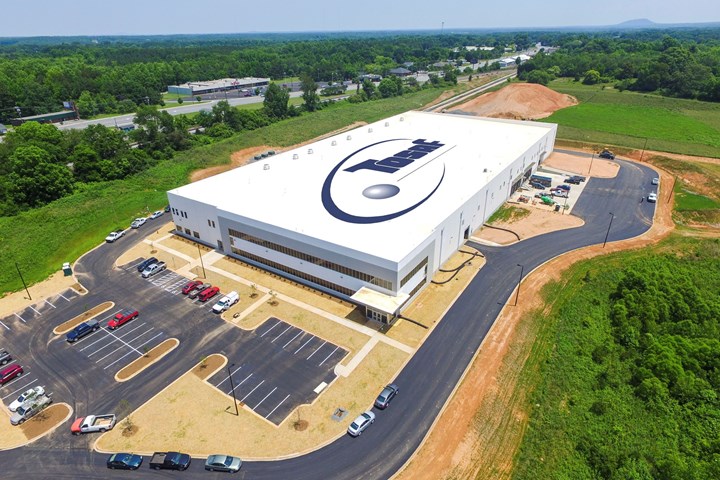
Israel’s Tosaf (U.S. office in Bessemer City, NC), which has been manufacturing high-quality additives, compounds and color concentrates for over three decades, has made significant inroads in the North America. Four of its 21 production facilities are in North America, including Charlotte, North Carolina; West Unity, Ohio; Dallas, Texas; and the most recent plant in Houston. Tosaf's extensive North American infrastructure with these strategically positioned facilities includes manufacturing flexibility with complete and full production lines for a variety of additives and colors that transform raw materials into smart products with customized features and capabilities. The company is well-equipped to address diverse packaging requirements, ranging from 50 lbs up to railcars across North America.
In 2023, Tosaf boosted its production capacity in the U.S. by 40%. The company’s investments include the installation of new extruder lines at the four locations, the implementation of advanced automation and control systems, and the launch of a newly commissioned lab for conducting trials for both company and customer purposes. The new added lines incorporate cutting-edge technology for additives production, with energy and water systems designed to minimize environmental impact.
Related Content
-
Advanced Biobased Materials Company PlantSwitch Gets Support for Commercialization
With participation from venture investment firm NexPoint Capital, PlantSwitch closes it $8M bridge financing round.
-
Prices Up for All Volume Resins
First quarter was ending up with upward pricing, primarily due to higher feedstock costs and not supply/demand fundamentals.
-
Polymer Showdown — PC/ABS vs. PC/PBT — May the Best Material Win
First in a series, experts from plastics engineering consultancy The Madison Group will pit leading thermoplastics against each other to see how they differ in processing characteristics, chemical resistance, thermal and mechanical performance, and more.


