
Antimicrobial-Containing TPEs for High-Touch Plastic Surfaces
Avient’s three proprietary TPE formulations inhibit bacterial growth by +99.9% and resist fungal and mold growth.


Three proprietary, thermoplastic elastomer (TPE) formulations that contain antimicrobial additives have been newly added to the GLS TPE portfolio by Avient Corp. Tested in accordance with JIS Z2801 and ASTM G21-15 standards, these antimicrobial additives have been shown to protect molded plastic parts by inhibiting bacterial growth (99.9 percent or more) and resisting fungal and mold growth.
High-touch surfaces and applications are especially vulnerable to such microorganisms, which can potentially cause odor issues and also cause detrimental aesthetic and mechanical property changes to a finished plastic part. This spurred Avient to develop GLS TPEs with antimicrobial additives, available as Versaflex and OnFlex grades. Potential applications include consumer electronics, personal care item grips, and automotive applications such as cup holder mats and HVAC seals.
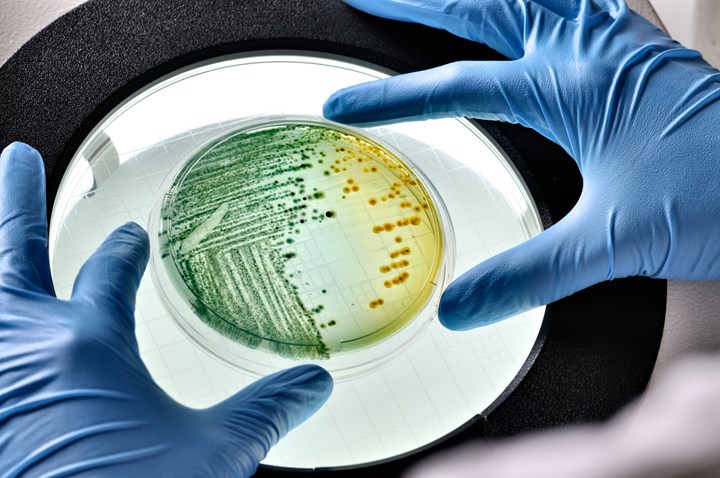
GLS TPEs with antimicrobial additives can help extend a product’s useful life, which results in a reduced need to replace it. Additional benefits include preserved surface integrity, increased durability, and minimized odors for a better consumer experience.
Tested against common microbes, GLS TPEs with antimicrobial additives reportedly have proven to protect finished parts from microbial growth on both textured and smooth surfaces. They are formulated with an EPA-registered antimicrobial from a trusted leader in microbial control solutions, Lonza LLC. This additive chemistry is the same one that has been used for decades in personal care products such as anti-dandruff shampoo.
GLS TPEs with antimicrobial additives are commercially available in the United States and Asia. Additional antimicrobial-containing formulations are in development.
Said Matt Mitchell, director, global marketing of Avient’s Specialty Engineered Maerials, “Products can now be designed with TPEs that can help extend useful life by inhibiting microbial growth, and these newly formulated materials also deliver the performance synonymous with our GLS brand of TPEs.”
Related Content
-
Understanding Postmold Shrinkage — Why Part Dimensions Change Over Time — Part 2
Molded-in stresses are often not visible during inspection but can reveal themselves in the field. What role does glass transition play?
-
August 2025: Prices for the 5 Commodity Resins Flat to Slightly Up
Barring weather and/or geopolitical production and supply disruptions, prices are generally steady.
-
Prices Up for PE, ABS, PC, Nylons 6 and 66; Down for PP, PET and Flat for PS and PVC
Second quarter started with price hikes in PE and the four volume engineering resins, but relatively stable pricing was largely expected by the quarter’s end.


