
Chiller Lines Updated to EPA-Approved Refrigerants
Thermal Care’s chillers now utilize EPA-approved low Global Warming Potential (GWP) R‐454B and R‐513A refrigerants.


Thermal Care’s chillers now utilize EPA-approved low Global Warming Potential (GWP) R‐454B and R‐513A refrigerants, with the company making the switch in advance of legislation that will phase out high‐GWP refrigerants that contribute to climate change.
Thermal Care points out that governments around the world are seeking to phase out refrigerants like R‐134a and R‐410A. An EPA rule proposal states that all high-GWP Hydrofluorocarbons (HFCs), including R134a, R404A and R410A, will be banned in most new refrigeration equipment effective Jan. 1, 2025. In 2024, 12 states will require GWP refrigerants and 11 more are considering it, according to Thermal Care.
Low‐GWP refrigerants have different thermodynamic properties than high‐GWP refrigerants, requiring component changes in equipment such as chillers. Thermal Care says it has researched and prepared for these changes for the past two years beginning to implement multirefrigerant compressors in early 2023. The company says this enables it to offer low‐GWP compliant products now that have the same cooling capacities and physical dimensions as its previous chiller offerings.
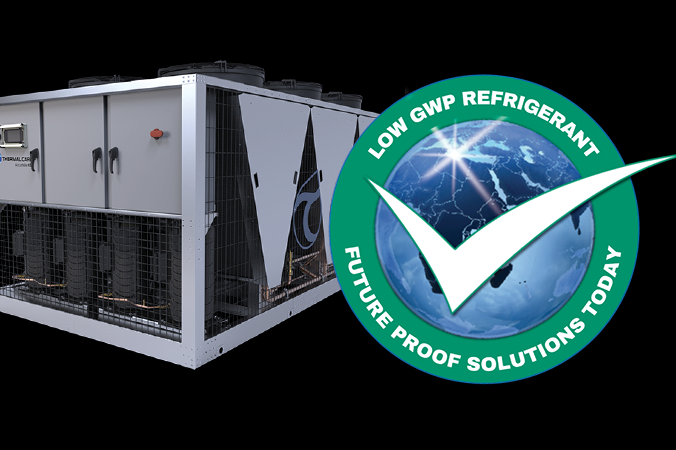
Thermal Care’s chillers now utilize EPA-approved low Global Warming Potential (GWP) R‐454B and R‐513A refrigerants. Photo Credit: Thermal Care
Related Content
-
Reifenhäuser's Secondary Cooling Ring Boosts Output, Reduces Need for Antiblock Additives
At K 2025, Reifenhäuser subsidiary Kdesign will take the wraps off the CENTRO-Freeze 2.
-
Cooling Bore Creates Turbulent Flow
Hasco says its Cooling Tornado facilitates turbulent flow, boosting cooling effectiveness by up to 20%.
-
What the Reynolds Number Means for Injection Mold Cooling and How To Achieve It
The Reynolds number is one of the most important, yet often misunderstood or overlooked, metrics for injection molding.


