
POM, PPS, PBT and LCP Powders for Wide Range of Processing Methods
Polyplastics’ new Durast series of engineering plastic fine powders are suitable for low-volume sinter forming, compression molding, and 3D printing.


A series of engineering plastic fine powders which are compatible with a broad range of manufacturing methods is newly available from . Polyplastics Group. The company has expanded its lineup with Durast Powders which go beyond traditional injection molding and extrusion and are targeted for low-volume production of complex parts utilizing sinter forming, compression molding, and 3D printing.
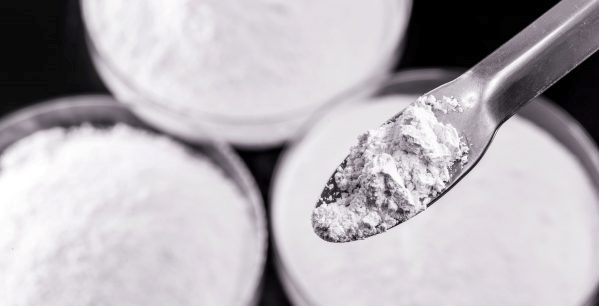
Durast Powders made of POM, PPS, PBT, and LCP reportedly have a unique spherical shape and are controlled for fine, narrow particle size distribution (10 μm-200 μm). Engineering plastics in powder form permit the use of manufacturing methods that were previously impossible with pellet shapes, making it possible to impart the strengths of engineering plastics and additional performance attributes.


Polyplastics developed these fine powders after extensive research and testing of powder manufacturing methods. The company was successful in powdering a POM with a low glass transition temperature. Moreover, modified Durast POM reportedly exhibits slow crystallization and is useful for 3D printing. It also has low warpage in SLS models and superior powder flowability so it can achieve model density over 95%.
Durast PPS can be used to mold porous structures through sinter formation. It is a linear PPS with strong toughness and heat resistance, along with strong chemical and radiation resistance. Since it has few ionic impurities, it is also said to withstand rigorous electrical requirements.
Durast LCP offers superior vibrational absorption with high heat resistance and high elasticity in dielectric constant modifiers. It also exhibits low water absorption and electrical properties that are stable at high frequencies. It is available in both formless and spherical powders.
Related Content
-
Prices Up for All Volume Resins
First quarter was ending up with upward pricing, primarily due to higher feedstock costs and not supply/demand fundamentals.
-
Polymer Science for Those Who Work With Plastics: Why Entanglements — Not Just Molecular Weight — Drive Plastic Performance
Ever try running your fingers through tangled hair? Yeah … that’s not fun, but that’s what happens at the molecular level when polymer chains reach the right length. They wrap around each other, intertwine and … get stuck — and those tangles are the real reason plastics perform the way they do.
-
Prices Up for PE, ABS, PC, Nylons 6 and 66; Down for PP, PET and Flat for PS and PVC
Second quarter started with price hikes in PE and the four volume engineering resins, but relatively stable pricing was largely expected by the quarter’s end.


