
Vertical Injection Molding Machine Range Extended
LS Mtron’s expanded range of LSG-V vertical machines has 13 models with a variety of injection and rotary table formats.


LS Mtron Injection Molding Machines USA (Duluth, Ga.) has added several new models to its line of LSG-V hybrid vertical injection molding machines, with 13 models of machines ranging in clamp force from 35 to 660 tons and including options for vertical or horizontal injection, and rotary table, shuttle or single-station designs.
The LSG-V, which is known outside North America as the WIZ-VR II, was previously available in three models, from 100 to 350 tons and only as vertical rotary machines.


The LSG-V Series can reduce overall cycle time by enabling operators to simultaneously perform product take-out and insertion processes during injection. The machines also feature a servo pump system for reduced power consumption, which uses an AC servo motor for reproducibility within 0.1% through feedback control. The rotation motor also enables low noise and precise control, and LS Mtron says that by optimizing hydraulic oil tanks and lines, the machines operating flow and cooling water consumption.
Constructed with a four-post tie-bar structure, the LSG-V can support up to four injection fixtures, and the slide-type guide bar design minimizes transfer resistance.
At NPE 2024, LS Mtron will feature a 170-ton LSG-V molding an electric vehicle component for sister company LS Automotive.
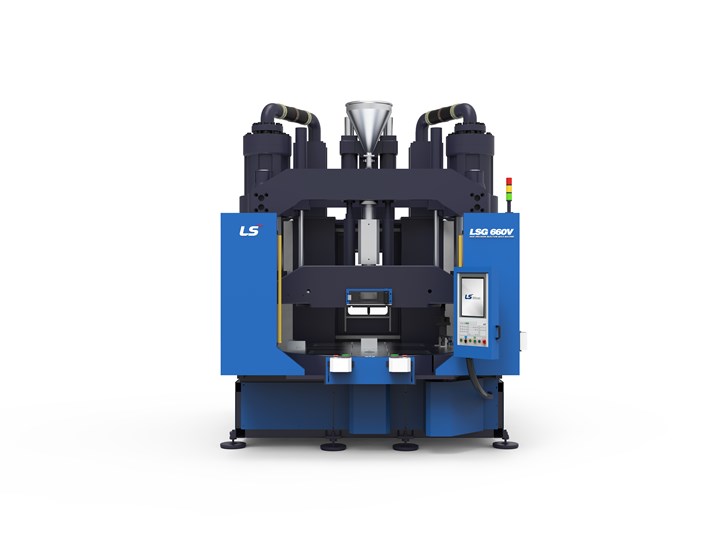
The expanded line of LSG-V vertical injection molding machines from LS Mtron includes 13 models with a variety of injection and table styles.
Photo Credit: LS Mtron
Related Content
-
How To Design Three-Plate Molds – Part 4
There are many things to consider, and paying attention to the details can help avoid machine downtime and higher maintenance costs — and keep the customer happy.
-
What to Look for in High-Speed Automation for Pipette Production
Automation is a must-have for molders of pipettes. Make sure your supplier provides assurances of throughput and output, manpower utilization, floor space consumption and payback period.
-
Understanding the Effect of Pressure Losses on Injection Molded Parts
The compressibility of plastics as a class of materials means the pressure punched into the machine control and the pressure the melt experiences at the end of fill within the mold will be very different. What does this difference mean for process consistency and part quality?


