
Engel Introduces Pay Per Use Option
The company says the pay-per-use model allows its customers to make payments based on machine utilization.


Austrian injection molding machine and automation supplier Engel now offers its customers a pay-per-use model in addition to traditional machine purchases. Engel says that in addition to helping processors reduce their investment risk, this model can also boost production flexibility. An Engel spokesperson told Plastics Technology that the pay-per-use program will start in Europe and be available in North America soon.
Under this system, payment is based on machine utilization levels, with a unit price agreed to. This price can either be per unit molded or by machine operating time. Engel believes the pay-per-use model will help processors avoid the risk of binding up capital in a new machine or forcing them to seek approval for substantial investments. In either case, the procurement process can be concluded more quickly.


All production cells delivered under the pay-per-use model feature the online support and remote maintenance tool e‑connect.24 and are regularly maintained by Engel service technicians. In a service case, the Engel technicians can start maintenance work immediately, or it can be planned at an early stage to keep unavoidable machine downtime to a minimum. e‑connect.24 acquires the machine utilization as the basis for billing.
At the end of the agreed contract, the customer has the option of purchasing the machine, or Engel Used Machinery, the pre-owned machine company in the Engel Group, can take the machine back.
The financing partner backing the new pay-per-use solution by Engel is linx4 GmbH, which is headquartered in Vienna.
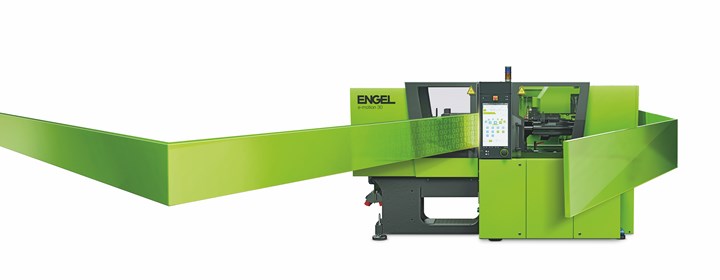
Engel says Pay per Use lets its customers reduce the investment risk of a new machine.
Photo Credit: Engel
Related Content
-
Optimizing Pack & Hold Times for Hot-Runner & Valve-Gated Molds
Using scientific procedures will help you put an end to all that time-consuming trial and error. Part 1 of 2.
-
Moving Beyond the Relative Viscosity Curve — Determining Optimum Plastic Flow Rates: Part 1
Should injection molders consider using a range of plastic flow rates, versus the selection of one plastic flow rate from the relative viscosity curve?
-
Use These 7 Parameters to Unravel the Melt Temperature Mystery
Despite its integral role in a stable process and consistent parts, true melt temperature in injection molding can be an enigma. Learning more about these seven parameters may help you solve the puzzle.


